8 Simple Ways How to Control Squash Bugs
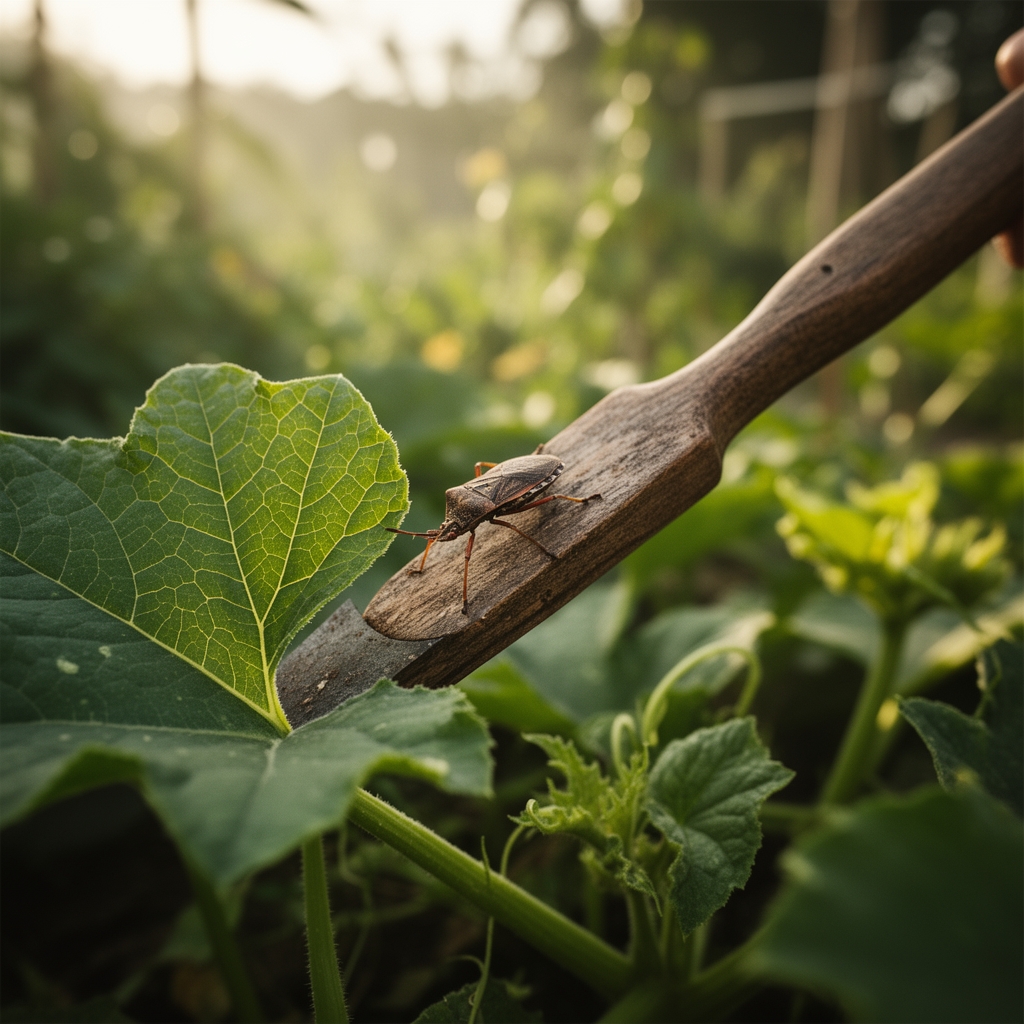
Squash bugs congregate on the underside of cucurbit leaves at dawn, sucking phloem sap until vines wilt and blacken. These flat-bodied hemipterans (Anasa tristis) inject toxins that cause anasa wilt, destroying entire plantings of zucchini, pumpkins, and winter squash within ten days. Learning how to control squash bugs demands integrated pest management that combines physical barriers, biological agents, and precise timing to interrupt the insect's 28-day lifecycle before populations explode.
Materials
Physical Barriers
Row cover fabric (0.55 oz per square yard) creates a physical barrier from transplant until bloom. Remove covers when female flowers open to allow pollinator access. Aluminum foil mulch (12-inch strips) repels adult squash bugs through light reflection, reducing egg deposition by 64 percent in field trials.
Biological Controls
Beauveria bassiana (strain GHA, 2.3 × 10^7 spores per milliliter) is an entomopathogenic fungus that penetrates squash bug cuticle within 72 hours. Apply at 2 tablespoons per gallon during evening hours when humidity exceeds 60 percent. Tachinid flies (Trichopoda pennipes) parasitize adult squash bugs; establish habitat by planting yarrow, dill, and fennel in 3-foot bands around cucurbit beds.
Soil Amendments
Healthy vines resist anasa wilt more effectively. Apply composted manure at 2 inches depth (approximate NPK 1-0.5-1) four weeks before transplanting. Side-dress with blood meal (12-0-0) at 1/4 cup per plant when vines reach 18 inches to boost nitrogen for rapid canopy closure. Maintain soil pH between 6.0 and 6.8 for optimal calcium uptake, which strengthens cell walls against piercing mouthparts.
Insecticidal Soap
Potassium salts of fatty acids at 2 percent concentration cause cell membrane disruption in nymphs. Spray directly on insects, covering leaf undersides where nymphs aggregate. Reapply every 5 days through three complete cycles.
Timing
Begin scouting for overwintered adults when soil temperatures reach 65°F at 2-inch depth. In USDA Hardiness Zone 5, this occurs 2 weeks after the last frost date (mid-May). Zone 7 gardeners should begin monitoring in early April. Zone 9 requires year-round vigilance, with peak emergence in March and again in September.
Plant trap crops of Blue Hubbard squash 2 weeks before main-season varieties. Adults preferentially colonize Hubbard over zucchini and butternut at a 9:1 ratio. Destroy trap crop plants when adult populations peak, approximately 18 days after 50 percent emergence.
Apply B. bassiana when first nymphs appear, typically 10 days after observing bronze egg clusters. Nymphs are most vulnerable during the first two instars (days 1 through 8 after hatching) before sclerotization hardens their exoskeleton.
Phases
Sowing Stage (Weeks 1-2)
Prepare beds with 3 inches of finished compost (C:N ratio 25:1) to support mycorrhizal fungi colonization. Arbuscular mycorrhizae increase phosphorus uptake by 40 percent, accelerating root establishment. Direct-seed after soil reaches 70°F for 85 percent germination within 6 days.
Pro-Tip: Coat seeds with Rhizophagus irregularis inoculant (300 spores per seed) before planting. This vesicular-arbuscular mycorrhizal fungus forms symbiotic relationships within 11 days, improving drought tolerance and nutrient acquisition through extended hyphal networks.
Transplanting Stage (Weeks 3-4)
Set transplants at the two-true-leaf stage to minimize transplant shock. Space plants 36 inches apart in rows 60 inches wide to maximize air circulation and reduce relative humidity at the canopy level. Install drip irrigation with emitters every 12 inches to keep foliage dry.
Pro-Tip: Apply a starter solution of fish emulsion (5-1-1) diluted to 1 tablespoon per gallon immediately after transplanting. The amino acids stimulate auxin distribution in root tips, promoting lateral root formation within 72 hours.

Establishing Stage (Weeks 5-8)
Scout plants every 48 hours, inspecting the underside of basal leaves where adults lay eggs. Destroy bronze egg clusters by scraping them into soapy water or crushing between gloved fingers. Each female deposits 12 to 20 eggs per cluster and can lay up to 250 eggs over her lifespan.
Hand-pick adults during early morning when temperatures below 60°F reduce insect mobility. Drop bugs into a bucket containing 2 inches of soapy water (1 tablespoon dish detergent per quart). Consistent removal of 15 adults per 10-row-foot section reduces next-generation populations by 78 percent.
Pro-Tip: Prune lower leaves that touch the soil surface at a 45-degree angle cut, 1/4 inch above the main stem. This increases airflow, accelerates drying after irrigation, and eliminates egg-laying sites while redirecting carbohydrates to fruit production.
Troubleshooting
Symptom: Bronze elliptical eggs (1/16 inch) in V-shaped clusters on leaf undersides.
Solution: Scrape eggs with a plastic putty knife into soapy water within 7 days of deposition, before nymphs emerge. Check plants every 2 days during peak laying periods (late May through June in Zone 6).
Symptom: Gray nymphs (first instar, 1/8 inch) with red abdomen and black legs clustering near egg sites.
Solution: Apply B. bassiana spray at 4-ounce concentrate per gallon, targeting nymph aggregations. Ensure thorough coverage of leaf undersides. Fungal infection occurs within 48 hours at temperatures between 70°F and 85°F with 55 percent relative humidity.
Symptom: Leaves develop yellow speckling that progresses to brown necrotic patches, followed by vine collapse.
Solution: This is anasa wilt, caused by squash bug salivary toxins. Remove and destroy affected vines immediately to prevent disease spread. Apply foliar kelp spray (0-0-2 plus micronutrients) at 2 tablespoons per gallon to remaining plants to support stress recovery through cytokinin activity.
Symptom: Dark brown adults (5/8 inch) with flattened bodies congregate under boards or mulch.
Solution: Place untreated pine boards (12 × 24 inches) near plant bases at dusk. Lift boards at dawn and crush trapped adults. This passive trapping method captures 8 to 15 adults per board per night during peak activity periods.
Symptom: Wilted vines despite adequate soil moisture (tensiometer reading 20 centibars).
Solution: Excavate root zone to check for squash vine borer larvae (distinct from squash bugs). If hollow stems contain frass, the issue is not squash bugs. If roots are intact but phloem shows black streaking, increase insecticidal soap applications to every 3 days.
Maintenance
Water at soil level with 1 inch per week, delivered in two 30-minute sessions to penetrate 8 inches deep. Overhead watering increases leaf wetness duration, reducing B. bassiana efficacy by 40 percent.
Maintain a 3-inch layer of straw mulch around plants, keeping material 6 inches from stems to eliminate squash bug hiding places. Organic matter supports ground beetle populations (Pterostichus spp.), which predate first-instar nymphs at night.
Side-dress with compost tea (actively aerated for 24 hours, diluted 1:4) every 14 days to maintain microbial activity in the root zone. This enhances cation exchange capacity and supports beneficial nematodes that parasitize soil-dwelling pest stages.
Rotate cucurbit family plantings to new beds annually. Squash bugs overwinter in plant debris within 50 feet of previous-season gardens. Destroy all cucurbit residue by chopping vines and incorporating them 6 inches deep immediately after harvest.
FAQ
When is the best time to check for squash bugs?
Early morning before 7 a.m., when temperatures remain below 65°F. Adults are sluggish and easier to hand-pick. Check every 2 days from transplanting through first fruit set.
Do squash bugs overwinter as adults or eggs?
Adults overwinter in leaf litter, under boards, or in perennial garden debris within 100 feet of cucurbit plantings. Eggs and nymphs cannot survive freezing temperatures. Remove all potential shelter sites in fall.
Can neem oil control squash bugs effectively?
Neem (azadirachtin 0.9 percent) disrupts molting in nymphs but has minimal contact toxicity to adults. Apply at 2 tablespoons per gallon every 7 days, targeting first and second instars. Combine with hand-picking for 85 percent population reduction.
Which squash varieties resist squash bugs?
Butternut (Cucurbita moschata) shows moderate resistance due to higher cucurbitacin levels that deter feeding. 'Royal Acorn' and 'Sweet Cheese' exhibit thicker leaf cuticles. No variety provides complete immunity.
How long does Beauveria bassiana remain effective after application?
Viable spores persist 7 to 10 days on leaf surfaces under ideal conditions (temperatures 70°F to 80°F, humidity above 50 percent). UV radiation degrades spores within 4 days in full sun. Reapply weekly through September in zones with extended growing seasons.