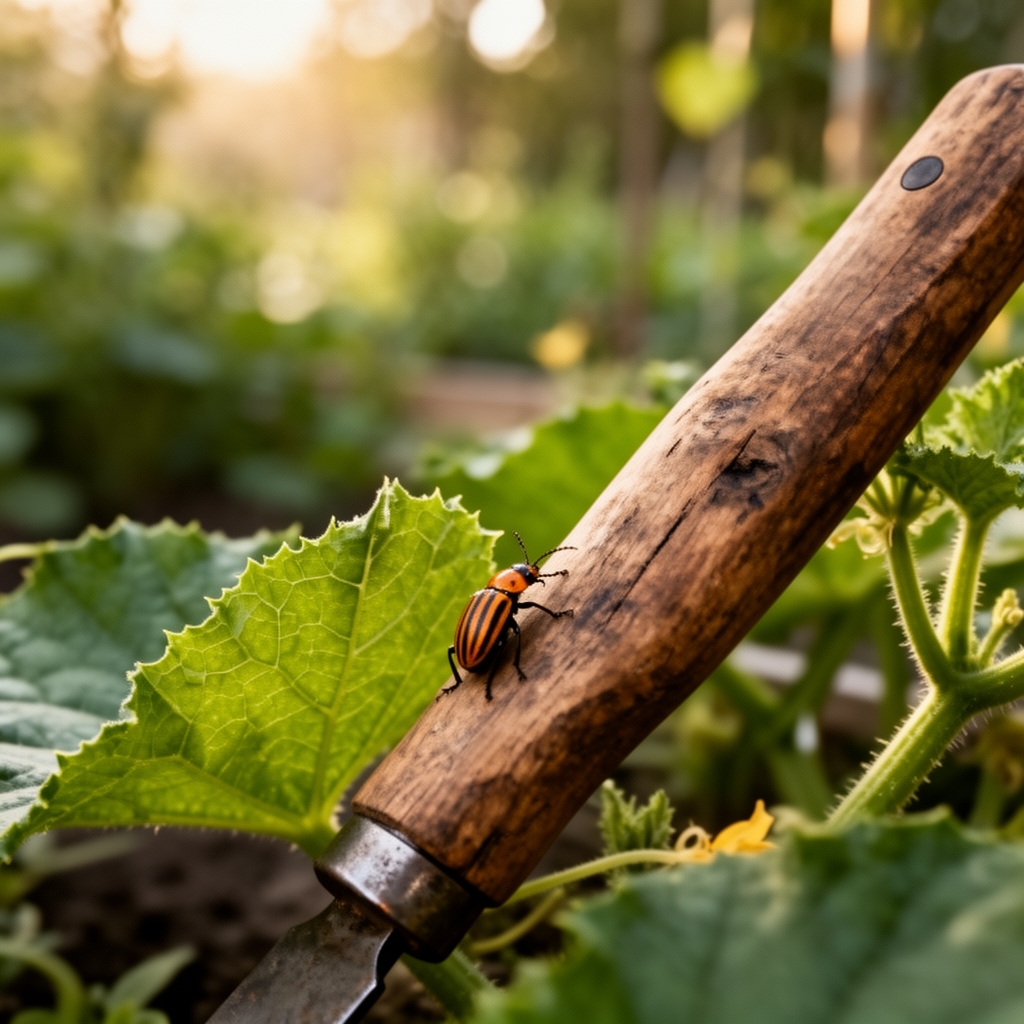
5 Quick Steps to Kill Cucumber Beetles
The striped cucumber beetle chews through cotyledons at dawn, leaving perforations smaller than a pencil eraser. Within 72 hours, bacterial wilt can collapse an entire vine. Implementing effective steps to kill cucumber beetles demands precision timing, targeted chemistry, and an understanding of their two-generation life cycle. A single female deposits up to 1,500 eggs at the soil line, where larvae feed on roots and adults vector Erwinia tracheiphila. The following protocol addresses both adult and larval stages.
Materials
Assemble these components before beetles emerge in mid-spring:
Organic Insecticides: Neem oil (azadirachtin content 0.9-1.2%) at 2 tablespoons per gallon disrupts molting hormones. Pyrethrin concentrate (1.4% active ingredient) provides contact kill within 15 minutes. Spinosad suspension (0.5% formulation) targets larvae for 7-10 days post-application.
Physical Barriers: Floating row cover (0.55 oz/sq yd weight) excludes adults until flowering. Yellow sticky traps coated with polybutene adhesive capture 40-60 beetles per trap weekly at peak pressure.
Soil Amendments: A 4-4-4 organic meal blend (feather meal, bone meal, kelp) applied at 2 lb per 100 sq ft strengthens cell walls through balanced nitrogen, phosphorus, and potassium uptake. Gypsum (calcium sulfate) at 5 lb per 100 sq ft corrects sodium imbalance and improves cation exchange capacity to 12-18 meq/100g.
Companion Plants: Blue hubbard squash acts as a trap crop, preferentially attracting beetles at a 4:1 ratio compared to cucumber. Tansy (Tanacetum vulgare) contains thujone compounds that repel chrysomelid beetles within a 3-foot radius.
Botanical Dusts: Diatomaceous earth (food-grade, 89% silicon dioxide) lacerates exoskeletons. Kaolin clay (95% kaolinite) forms a particle film that deters feeding and oviposition.
Timing
Deploy steps to kill cucumber beetles according to hardiness zone phenology:
Zones 3-5: Begin monitoring when soil reaches 60°F, typically 2 weeks after last frost (May 15-June 1). First-generation adults emerge from overwintering sites when forsythia blooms.
Zones 6-8: Scout starting April 20-May 10. Two complete generations occur, with peak pressure in late May and again in mid-July.
Zones 9-10: Year-round vigilance required. Winter populations remain active when daytime temperatures exceed 55°F. Focus on December-February plantings.
Apply neem oil every 7 days beginning at cotyledon stage. Spinosad applications require 40°F minimum nighttime temperatures for efficacy.
Phases

Sowing (Weeks 1-2): Direct-seed cucumbers 1 inch deep in hills spaced 36 inches apart. Coat seeds with thiram fungicide (75% wettable powder at 0.5 oz per lb seed) to prevent Pythium damping-off. Inoculate planting holes with Glomus intraradices mycorrhizal fungi at 1 tablespoon per hole to enhance phosphorus uptake by 30%.
Pro-Tip: Soak seeds in a 1% seaweed extract solution for 4 hours before sowing. Cytokinin compounds accelerate germination by 18-24 hours, creating a narrow window where seedlings emerge before peak beetle flight.
Transplanting (Weeks 3-4): Harden off seedlings over 7 days, reducing water by 40% to thicken cuticle layers. Transplant on overcast days when air temperature remains below 75°F to minimize auxin distribution shock. Install row covers immediately, burying edges 6 inches deep with soil.
Pro-Tip: Paint transplant stems with a slurry of kaolin clay (1 cup per quart water) from soil line to first true leaf. This creates a mechanical barrier against cucumber beetle oviposition for 10-14 days.
Establishing (Weeks 5-8): Remove row covers when female flowers open to allow pollinator access. Apply pyrethrin spray at dusk (beetles are least active, bees have returned to hives). Spray undersides of leaves where beetles aggregate, achieving 90% contact. Reapply every 3 days for 2 weeks during bloom.
Pro-Tip: Prune lateral vines at a 45-degree angle 12 inches from the main stem using sterilized shears. This concentrates plant energy into fruit production and reduces leaf surface area vulnerable to beetle feeding by 35%.
Troubleshooting
Symptom: Wilting vines despite adequate soil moisture. Vascular tissue shows brown streaking when stem is split longitudinally.
Solution: Bacterial wilt transmitted by cucumber beetles. Remove infected plants immediately. No chemical cure exists. Intensify beetle control on remaining plants with twice-weekly pyrethrin applications.
Symptom: Scarred fruit epidermis with corky, russeted patches 2-5 mm wide.
Solution: Direct feeding damage from adult beetles. Apply spinosad every 5 days during fruit set. Harvest undersized fruit to redirect plant resources.
Symptom: Stunted growth, chlorotic leaves, root systems with brown lesions and tunneling.
Solution: Larval feeding on root cortex. Drench soil with Steinernema feltiae nematodes (5 million per gallon) at base of plants. Beneficial nematodes parasitize larvae within 48 hours. Apply when soil is 50-80°F.
Symptom: Yellowing leaves with necrotic spots 3-6 mm diameter, confined to older foliage.
Solution: Potassium deficiency exacerbated by cucumber beetle stress. Sidedress with 0-0-22 sulfate of potash at 1 lb per 50 ft of row. Water immediately.
Maintenance
Water cucumber plants with 1 inch per week delivered through drip irrigation. Overhead watering spreads bacterial wilt pathogens. Mulch with 3 inches of straw to suppress cucumber beetle larvae pupating in soil.
Sidedress with 5-10-10 fertilizer at 1 lb per 25 ft of row when vines reach 12 inches long. Nitrogen drives vegetative growth; phosphorus supports root development against larval damage.
Scout plants every 48 hours during peak beetle activity. Remove and destroy beetles by hand in early morning when cold temperatures slow their movement. Drop into soapy water (1 tablespoon dish soap per quart).
Rotate cucumber family crops (Cucurbitaceae) to new beds every 3 years. This breaks the cucumber beetle life cycle by eliminating larval food sources overwintering in soil.
FAQ
When do cucumber beetles cause the most damage?
Peak feeding occurs during cotyledon and first true-leaf stages, typically 7-14 days post-emergence. A single beetle can kill a seedling in 36 hours. Adult populations surge again during bloom when they feed on pollen and petals.
Can I use synthetic pyrethroids instead of organic pyrethrin?
Synthetic pyrethroids (permethrin, bifenthrin) persist 14-21 days compared to pyrethrin's 12-hour half-life. However, they kill pollinators for 3-5 days post-application. Apply only after dusk and never during bloom.
How effective are trap crops?
Blue hubbard squash planted as border rows 2 weeks before cucumbers diverts 75-80% of beetle pressure. Destroy trap crop plants before beetles complete mating to prevent population expansion.
Do cucumber beetles develop resistance?
Neem oil and spinosad show no documented resistance after 20 years of use. Rotate insecticide classes (botanical, microbial, synthetic) every 3 applications to delay resistance development.
What temperature kills overwintering adults?
Sustained temperatures below 10°F for 72 hours cause 90% mortality in leaf litter. Till garden beds in fall to expose beetles to winter predation and freeze events.